Words and photos by Olivia Declercq, our Jetsetter Journalist for the fall semester, reporting from her study abroad home base of Aix-en-Provence, France.
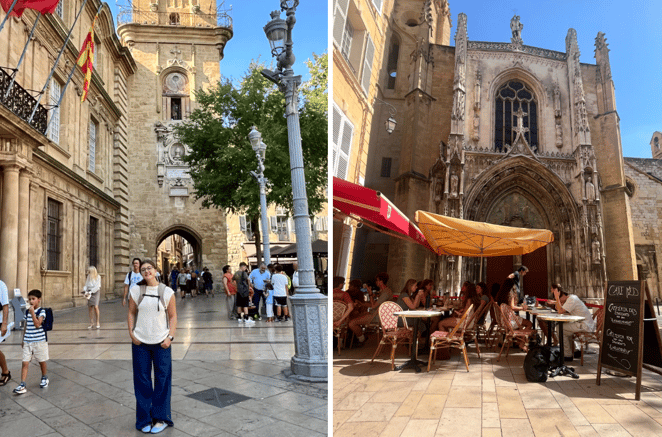
After one week in my new home, I could not be more than excited for the semester ahead, but there have definitely been some culture shocks while settling into life in France. I love the culture and the routines I’ve developed, but that’s not to say there haven’t been adjustments in both habit and mindset to accommodate myself in this new country.
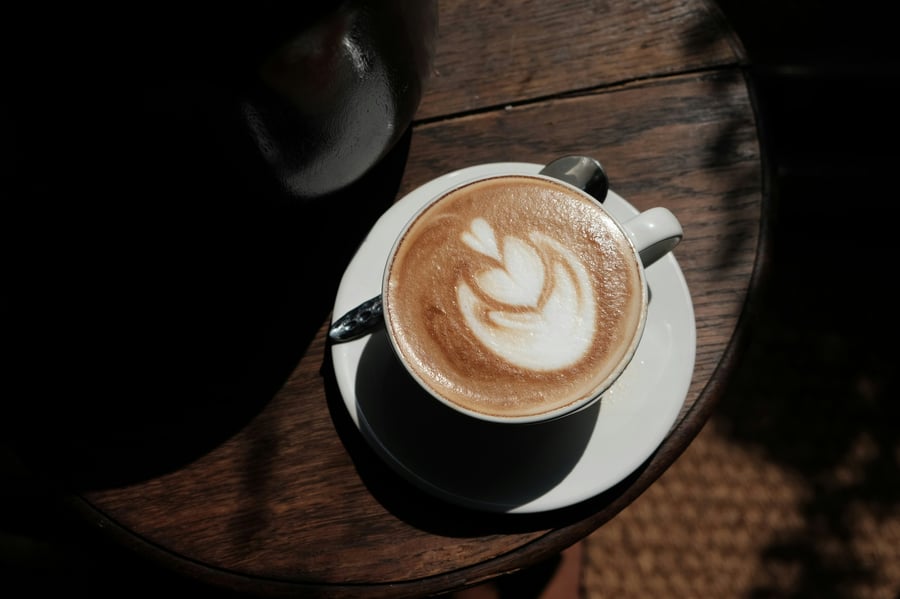
BREAKFAST. Most notably, the eating habits in France are very different from those of the United States. The phrase “petit dejeuner” could not be more correct as an indicator for French breakfast. It translates literally to “small lunch,” and it’s really just a piece of bread and a coffee. I don’t think I find anything wrong with this approach; rather, it is something to get used to if you’re a breakfast person in the United States.
MEAL TIMING. Additionally, the times of other meals are much more spread out. While lunch is around noon to two, like it is in the United States, dinner in France is usually not until eight or nine in the evening. While Americans are more likely to grab drinks after dinner, the French socialize with friends at outdoor bars after work before heading home for a family dinner later in the evening. Adjusting to later dinners can be difficult when lunch is seven or eight hours prior to the next meal, but I’ve found that embracing the French mindset of socializing before dinner has helped curb the hunger.
DINNER. Now at the table, dinner is a cornerstone of French domestic life. Unlike in the United States, dinner is always eaten together as a family. There are usually three or four courses, at least an hour of passionate conversation, and participation from everyone in the household to set the table and clean up after dinner. I love dinners with my host family because I learn so much about French life, politics, and the language when listening and participating in dinner conversations. Not to mention, the food made at my host family’s dinners is always delicious.
BATHING. Outside of eating habits, there were a couple of other culture shocks as an American coming to France. First, the bathing situation can be a bit different. In the United States, a shower is much more common than a bath, but in France this isn’t necessarily the case. My host family’s bathroom does not have a traditional shower; instead, there’s a bathtub with an additional handheld showerhead. This means standing in the shower and letting the water fall over you isn’t an option. This isn’t my favorite adaptation I’ve had to make, but I do believe I’ve got a routine that leaves me feeling my best.
ENERGY. Another cultural difference between the United States and France is climate concern. In addition to conserving water, the French are much more conservative with their energy use. In turn, the amenities we consider to be normal in the United States are more of a privilege in France. For example, my host family does not use air conditioning to cool the home or a dryer when doing laundry. Instead, they use open windows and air-drying techniques that don’t use any additional energy. While it seems like these practices just make life harder, the reality is that cultural and political values are guiding behaviors that are more ethical.
WATER. The last major culture shock Americans need to be aware of when coming to France is the lack of water access. In the United States, water is viewed as a basic human right. It is free in most places, and there are always public water foundations available. The same cannot be said of France. A bottle of water could cost anywhere between 4 and 10 euros, and water fountains don’t exist as ubiquitously as they do in the United States. In fact, carrying a water bottle and drinking lots of water indicates to French people that you’re an American!
That being said, I still plan on drinking water; I just need to make sure to fill my bottle when I have opportunities to do so. Culture shocks can take a week or two to adjust to, but they’re nothing students from the United States can’t embrace. Life in France is wonderful, you just have to keep your mind open to different cultural customs.
Thanks Olivia!

 Find a Program
 Ask an advisor
 Ultimate study abroad checklist
 Study abroad gift guide