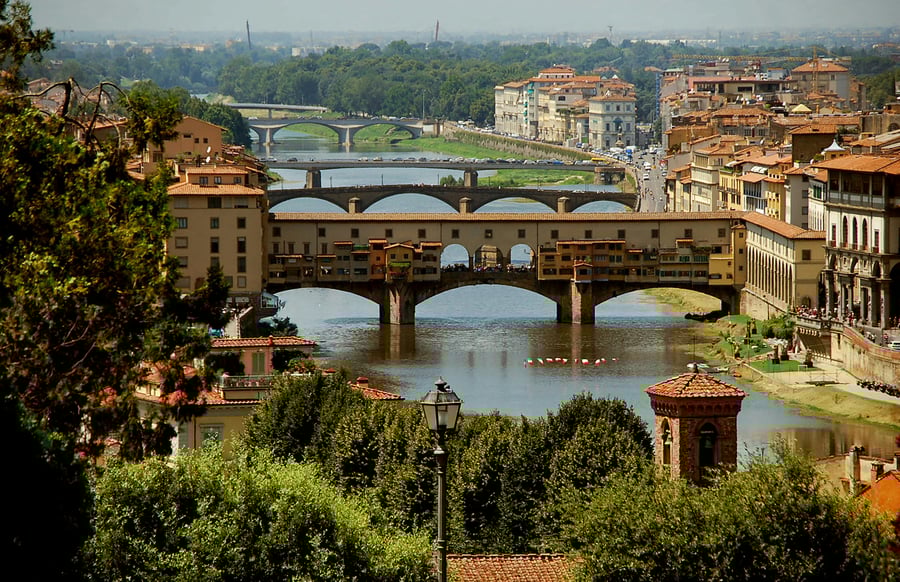
Words and photos by Adria Meadvin, who studied abroad with ASA in Florence, Italy, during the spring semester of 2026.
Florence is notoriously famous for Renaissance art and the beauty of ancient architecture, but its modern street art scene is just as impactful. While exploring the city, I discovered the story behind Clet’s “Common Man” statue and the recent mystery of its missing head.
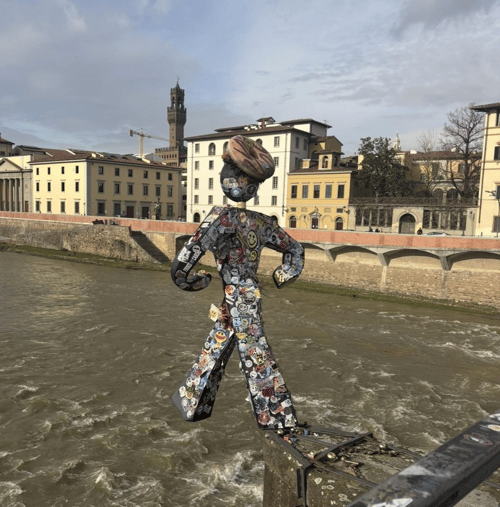 Photo: L’Uomo Comune, where the statue originally stood before the mystery took place.
When most tourists think about the art Florence portrays, they picture masterpieces from the Renaissance and historic sculptures. When walking through the city for the first, second, or third time, it’s easy to focus on the most famous works like David or the grand statues in Piazza della Signoria. But living in Florence as a student for two months now has shown me that the city’s art scene isn’t only about the historic aspects. It's about street art that showcases the real emotions of Florence now.
One of the only street artists that Florence knows the true identity of is Clet Abraham, a street artist known for his powerful work turning ordinary traffic signs into works of art. If you spend enough time walking around Florence, you’ll likely notice them everywhere. There are figures climbing stop signs, or characters interacting with the symbols on the sign, and many more creative displays.
Clet Abraham, originally from France, moved to Florence, Italy, in the early 2000s and quickly became famous for transforming ordinary traffic signs into his symbolic works of street art. Painting on the walls, like spray paint graffiti, is actually illegal in Florence. So to teeter around this, Clet instead adds removable stickers to the street signs and creates fascinating scenes that interact with the original symbols while ensuring they are still readable.
Since Clet’s moved to Florence, his clever interactions through art have become a small but memorable part of everyday life in Florence. Tourists often begin noticing them scattered throughout the historic center after spending enough time exploring the city.
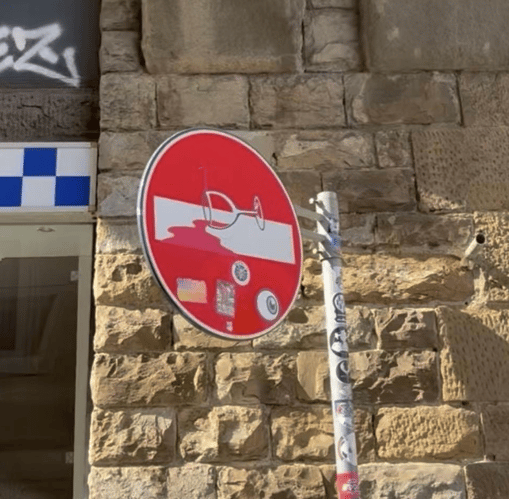 Photo: An example of a manipulated street sign, a staple in Clet Abraham’s work. The “do not enter” sign has been manipulated with a sticker to show a glass of wine spilling.
Clet also runs a small studio and gallery, “Clet Studio,” where students, tourists, and locals alike can see prints, sculptures, and other artwork inspired by his street installations. The studio offers a chance to experience the artist’s work up close and learn more about the creative process behind one of Florence’s most distinctive art voices.
I originally thought these signs were just random works of graffiti or rebellion. However, while doing a “Street Art Walk,” in my Social Media class, I realized they were part of a much larger street art project. You see, Clet sees street signs as a way to reach people because every person sees these street signs, even if they’re not purposefully looking. He engages the Florentine locals and visitors by putting his messages on something that every person is exposed to.
Clet created the iconic sculpture, “L'Uomo Comune,” or, “The Common Man.” This statue was installed on Ponte alle Grazie, and appears to be taking a step off the edge of the bridge and into the Arno River. L’Uomo Comune represents an ordinary, everyday person taking a step into the unknown, something that feels very relatable to me while studying abroad in a new country.
For many years, the figure became a memorable part of the Florence landscape. Many locals and tourists would take their time on the bridge in order to photograph the tiny silhouette standing over the river view. Recently, however, the statue became the center of a strange mystery.
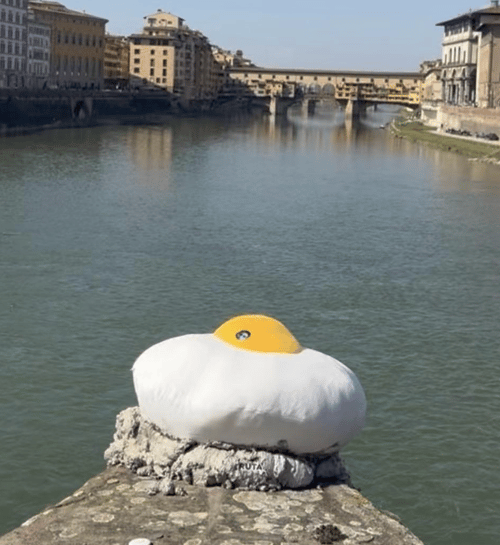 Photo: Where L’Uomo Comune once stood, an egg-shaped stuffed toy now takes its place, overlooking the river.
About a month ago, a mystery person removed the sculpture from the bridge, removed its bolts and screws, and threw it into the Arno River. The body of the statue was recovered and returned to Clet, but oddly, the head was missing. Following the odd discovery of the beheading of L’Uomo Comune, Clet announced that he would offer a reward to anyone who finds and returns the missing head. That reward? A choice of any piece of artwork directly from his studio.
In the place of the statue, an egg-shaped stuffed toy has taken the burden of holding the space, in hopes that L’Uomo Comune can return home. So far, the head has not been found. Some people believe it may still be somewhere at the bottom of the river.
I had the opportunity to visit Clet’s studio and meet Clet, who is clearly devastated about this mystery surrounding his beloved statue. Stories like this, an ongoing plot, are one of the things that make living in Florence interesting as a student. While the city is famous for centuries-old masterpieces, there are also modern artists actively shaping the streets today.
Discovering Florence, to me, means being able to look beyond the museums and notice the smaller details around the city, from altered street signs to a missing-in-action piece of an iconic statue. And who knows, what if one of us students will be the one to find the missing head?
Thanks, Adria!

 Find a Program
 Ask an advisor
 Ultimate study abroad checklist
 Study abroad gift guide
.png?width=900&name=Copy+of+ASA-Instagram+Template+(69).png)
.png?width=900&name=Copy+of+ASA-Instagram+Template+(66).png)